Building a complete research brief
What a picture research brief should contain, from subject and usage to deadlines, budgets and how a buyer's approval process works in practice today.
· The editorial team of The Rights Desk · Finding and Provenance
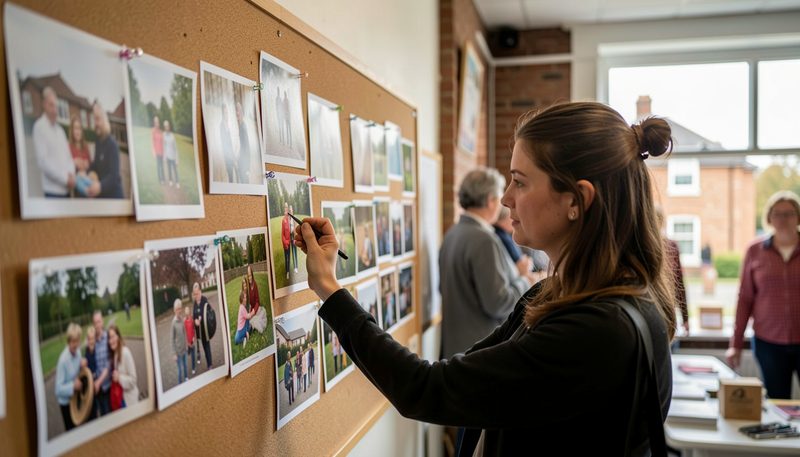
You learn what to put in a picture research request so a researcher can match subjects, uses, deadlines and budgets without guesswork. A complete request describes the subject in plain visual terms, names each use with territory and duration, sets delivery dates and file needs, and states the budget with the licence model you accept.
Start with the subject in words a stranger can picture
Name the subject as you want to see it on the page. If you need a street market in Leeds on a wet morning, say so, with the number of people in frame, the age range you will accept, the season, the time of day and whether you need landscape or portrait. Add how many options you expect and how close they should sit to each other, so the researcher does not send unrelated files. The reason is practical. Detailed and accurate descriptions can be searched by users or by machine-readable code, which gives smoother work inside an organisation, more precise tracking of images and more licensing opportunities. When your wording mirrors the descriptive fields that stay with the file, your request is easier to match and easier to defend later if questions arise about what you asked for.
What does your usage actually cover?
State each use in full. Tell the researcher whether the picture will run as editorial or for commercial promotion, where it will appear, for how long and in how many copies or impressions. A cover for a UK print run is a different permission from a homepage banner that runs worldwide for a year with paid social cuts. Explain the distinction in your request because model and property releases hinge on this point. A recognisable person or a private interior shown to sell a product calls for paperwork that a news report may not need. Your note on editorial and commercial use tells the researcher which releases to ask for and whether a picture offered without them should be passed over.
Why licence type changes the request
Name the licence models you will accept. A rights-managed file priced for one use is not interchangeable with a royalty-free file or with an openly licensed image that carries conditions on credit, adaptation or commercial use. If open licensing is in scope, say which conditions you can live with and how you will give credit. Creative Commons is the non-profit organisation behind the open licences and other legal tools that let creators share work, and the organisation states that its legal tools are free to use. Its Licenses List page sets out the 4.0 International suite, with a Deed and Legal Code for each tool in languages that include English, French, German, Spanish, Danish and others, under short codes such as BY-NC, BY-ND and BY-SA with non-commercial and share-alike variants. You can compare the current open licence choices before you write that line, then copy the exact code into your request so there is no doubt about which version you mean.
What deadlines and delivery details do you set?
Give dates that a supplier can plan around. List the date for first options, the date for final selection, the publication or launch date and any embargo that applies. Add file needs beside each date, such as low-resolution files for layout followed by high-resolution files with intact copyright and credit fields for production. The reason is that late substitution costs time and money. When a first choice fails clearance, the researcher needs room to supply an alternative with the same subject, use and licence fit. State how you want delivery, how you want files named and who should receive them, so nothing waits in an inbox while the deadline passes. Say whether weekend working is accepted for urgent clearance queries.
How do budgets shape the choice?
State the budget in numbers and say what it must cover. Tell the researcher the ceiling per image and for the set as a whole, whether the figure includes taxes and fees for rush supply or extended use, and which licence models sit inside it. The Creative Commons page does not publish budget guidance for buyers. That limit matters because an openly licensed image can still carry costs for sourcing, checking, crediting and adaptation, while a commercial licence may price territory, duration and size separately. When you write the ceiling next to each use, the researcher can rule out files that would need a further payment later and focus on options that stay inside the figure you can approve without asking for more money.
How will you check provenance before you pay?
Ask how provenance will travel with the file. IPTC Photo Metadata sets the industry standard for administrative, descriptive and copyright information about images, and the schema defines the structure, properties and fields so images can be described in a consistent way and found again later. The standard is widely adopted among photographers, distributors, news organisations, archivists and developers for that reason. Photo metadata protects copyright and licensing information online, supports asset management and helps with precise tracking of images. Ask the researcher to keep embedded fields intact, to record the creator, credit line and licence terms in provenance and metadata checks and to flag any file where rights information has been stripped on transfer, which IPTC research highlights as a real concern on software and social platforms.
What happens when information is missing?
Agree on what the researcher should do when a field is blank. Tell them to pause rather than guess if the creator is unknown, if the date of creation is missing or if the licence code on the file conflicts with the credit line. Ask for a short note with each option that lists what was checked, where the gap sits and whether a substitute with cleaner paperwork exists. User guides such as the IPTC Core and Extension Guidelines, with a toolkit for Adobe software, a user forum and sample image files, show how much can be stored with an image when the workflow is set up well. Keep your request, the options and the replies together in one thread, and approve payment only against the file whose paperwork matches the use you named.
A brief that names its sources properly will also name its costs. Buyers who set picture licensing as a budgeted line, rather than an afterthought, tend to write tighter briefs and waste fewer searches. The desk's guide on picture budgets and grants looks at how a small firm in Scotland treats licensing as a planned cost, and which public business support can cover it: grants for small businesses, the Small Business Bonus Scheme rates relief, and the Business Gateway advice route. It is a plain English reference page, not legal or financial advice, and it shows the same care with sources that a good brief demands.
A brief is only as good as the sources behind it, and the same discipline applies when a researcher documents a public process rather than a photograph. The desk reference on Idaho voter registration sets out the registration sequence, the county clerk's role and the accepted photo ID, then shows how each step can be checked against the official body that administers it. Read it as a worked example of checking a civic process against its source, and apply that habit to every fact, date and name you put in a brief.